Art speaks where words are unable to explain
When I was in middle school I remember going on a field trip to an art museum. As the teacher was guiding us through the exhibit I remember seeing all these paintings and sculpture everywhere. Some of the pictures looked cool, others were just ok and there were some that I just didn’t understand. I honestly didn’t understand what all the hype was about, or why people would pay to go to a museum, spending hours on end there just to look at art. This was something that I just couldn’t wrap my head around. Fast-forward to my college years I remember having to take 2 speech classes. One of these classes was called Oral communication with Visual Art. Now this was one amazing class. The class significantly increased my appreciation for art. This course was geared towards giving speeches,where we broke down, interpreted and analyze various art pieces. This class really opened my eyes and allowed me to view art through a different lens. It allowed me to grasp deeper comprehension of a variety of art pieces, by breaking down elements of various piece that went beyond the initial face value. What I want to do today is tell you about three things that I’ve learned from this class that I feel are important when you are trying to fully take in a piece of art. These 3 things are history, numbers and color.
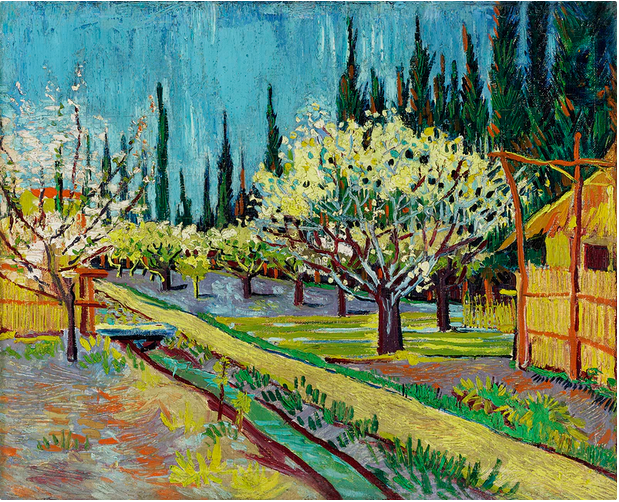
The first thing that needs to be considered would definitely have to be the history of the art. History is important because the inspiration behind a work could be directly related to the time of creation. When I talk about history, I’m talking about the life of the artist, time period and events that took place when a piece was put together. All of these things can contribute to the inspiration behind a piece. An artist’s life, just like the average person is filled with experiences, upbringing and time period they were raised in which can play a major role in how they express themselves, through art.
Some pieces are historic, as they sometimes pay tribute to historic events, notable figures/people who made significant marks in history based on a specific time period. The evolution of art can be related to history as very early artwork (hieroglyphics) used for communication, while later works, is used to inspire, entertain, capture historic moments, or showing a token of appreciation. The era tends to add an umbrella of context surrounding an artistic piece. History is very significant when it comes to breaking/interpreting art.
Another thing that is not widely know to an average art viewer, is the meaning of numbers. Numbers can have a meaning that spans far beyond the logical meaning that many of us are commonly used to. This concept is called numerology. Numerology deals with the occult significance of numbers. The meaning of the numbers come from history, religion and cultural mythology. For example, lets take some random numbers between 1 & 10:
The Number 0
- Symbolizes totality as it is shaped like a circle where everything is contained inside. Think of when you give someone a hug or all food on a plate when you’re eating dinner. (completeness, entirety, etc)
- Womb (before birth you are 0 years)
- Preceding life(before you are age 1 you are 0);
- All the potential for life
The Number 1
- Symbolizes leadership/strength confidence
- Represents individuality, self-discovery/empowerment
- New beginnings
Number 4
- Number representing stability and fortitude
- Solid foundation (4 seasons)(table) (chair)
- 4 elements of the universe (earth, fire, air, water)
- Day is divided into 4 parts morning, evening, noon and midnight
- Table or chair has for legs making it stable
Number 10
- Completion; attainment of wholeness
- Used in ranking to describe anything that is near perfection (surveys)
- When you take a survey you usually have to rate from 1 to 10 usually with 10 being the best
Numbers are not added to every piece but when they are they play a major role in adding additional context to specific pieces. As you can see numbers can give a hidden/deeper meaning to art pieces.
Last but not least would have to be color. Color makes art vibrant. Color plays an important role in art as well as the world we live in. It has the ability to sway our thinking, change actions and cause us to react differently. Just like numerology color also has a deeper meaning to it…

Green:
- Life, growth, money, freshness, environment, natural, healthy
Black:
- Sophistication, mystery, evil, death, unknown
Red
- Danger, passion, urgency, love
As you can see based on these colors by just thinking of these colors you can immediately relate what emotion or feelings each one represents. The reason why you feel a connection with these colors is because society has played a major role in subliminally giving a definition to these colors based on our upbringing, things we see on TV, what we learn in school, history and ultimately things we see in everyday life. Here you can see how color plays a major role when it comes to art, it brings life and feeling to the piece.
Lastly what I want to do is talk about this painting called “The Return of the Prodigal Son” by the artist Rembrandt van Rijn. This particular piece was painted between 1661–1669. Rembrandt was a Dutch artist who was born in Amsterdam. His artistic paintings were very popular throughout his lifetime. The central theme to most of Rembrandt’s paints were surrounded by religion. He was mostly known for his self-portraits, and depiction of scenes from the Bible which are recognized as some of his greatest artistic triumphs as an artist.
This particular piece below here is inspired by a story from the Bible called The Prodigal Son from the book of Luke. The story is about a father who has 2 sons. The youngest son asks his father for his inheritance, because the son could not wait for his fathers death. The father goes ahead and grants his son’s request. Not long after that the son travels off to a distant country and squanders his wealth on wild living to the point where he becomes destitute/poverty-stricken. After the son’s impetuous journey, he then returns home empty-handed, and begs his father for forgiveness. The father welcomes his son with open arms and celebrates his return. The moral of this story is that the son was lost but now he is found. You don’t know how valuable something is until you loose it all. It represents a kind of learning lesson which I feel spans way beyond money or inheritance. The true worth of something will truly be vivid once it is gone. This goes for people, money, opportunities etc.
This is the picture from Rembrandt where he depicts this precious moment when the son returns to his father.

The above picture here depicts the father and his youngest son. Take a look at the son’s body language as this can also play a role in interpreting art. From this pic you can see the son is on both knees symbolizing submission, mercy and begging for forgiveness.
Here you can also see a form of numerology, where the father places 10 fingers on the sons back. Just like I talked about before the number 10 represents completeness. This ultimately symbolizes the father has complete unconditional love for his son.
Color also plays a role here. As you can see the father here wears a red cloak, lying across his back. The color red symbolizes love for his son. This brings a sort of warmth to the piece that evokes feelings of tenderness, care and empathy.
So, as you can see Rembrandt, has put a lot of thought into this piece of art work.
Overall art has a lifespan that continues to this day. The reason why it continues to thrive and is valued by most, is simply because of the amount of passion and feeling an artist puts behind the tip of their paint brush. The pieces that we are most inspired by come from artist that are truly trying to convey a message that last for years to come. Being able to recognize and acknowledge different elements in art, allows us to open our minds and find deeper meanings in various artistic pieces.
By the way, I love going to the museum nowadays.
 MK Blog